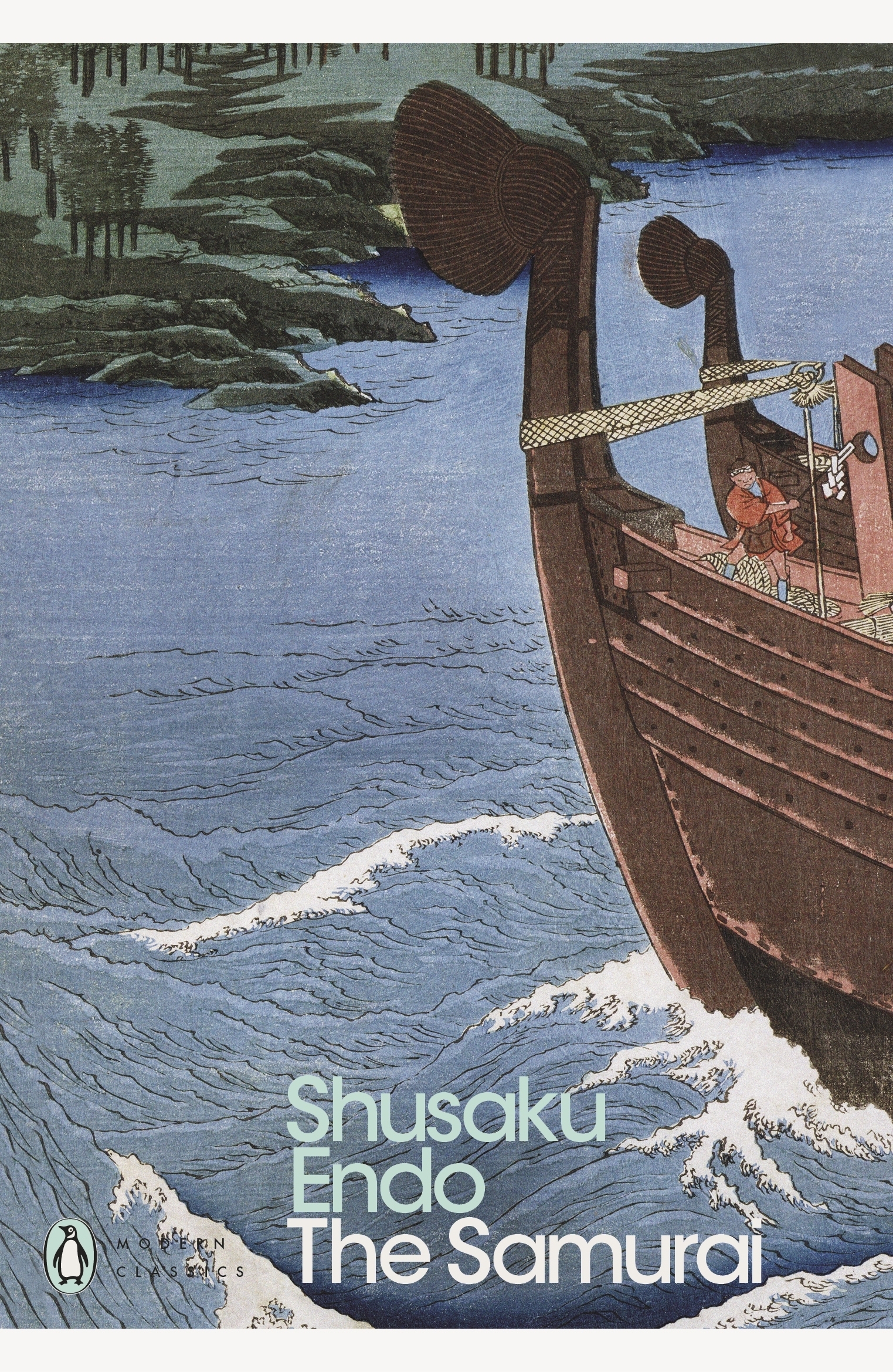
I had never previously read anything by Shusaku Endo. All I knew about him was that one of his novels, Silence, had been adapted into an award-winning film directed by Martin Scorsese. I had watched bits and pieces of the movie, and it was compelling enough to spark my curiosity about the events that took place in Japan during the 1500–1600s. Discovering that The Samurai was set in this period, I decided to give the book a try. I went in without expectations and emerged with a new perspective on faith and what it means to us.
Endo-san’s storytelling is simple yet evocative. His words conjure images and emotions so vivid and raw that readers may feel as though they are inhabiting the characters themselves. While the characters may seem one-dimensional on the surface, Endo-san makes ingenious use of them to explore the multidimensionality of faith within a single narrative - faith as an attachment to one’s roots (through the Samurai); the justification of greed and ambition through faith (through Father Velasco); faith as a political tool (through the Japanese administration); faith as a means of finding peace amid misery (as seen in the plight of the native Indians in España); and faith as a force that homogenizes cultural differences (the Spaniards’ warmer reception of the Japanese once they converted to Christianity). Not all of these themes are explored in full depth, but Endo-san skillfully brings them to the surface and compels the reader to reflect more deeply on what faith is and what it means to an individual. To me, it seems that Endo-san is suggesting that faith cannot mean the same thing to everyone. Even when religious truth is presented as universal, the human experience of that truth is inevitably filtered through culture, suffering, fear, ego, and circumstance.
Another poignant idea that Endo-san subtly highlights is the omnipresence of human strife, regardless of geography. The Samurai travels thousands of miles to a distant, unfamiliar land only to witness the same misery among the native Indians that he sees in his own marshland. By the end of his journey, the Samurai understands that it is not faith but suffering that erases differences between people—that suffering is what binds humanity together.
“The wide world, the many countries, the great Oceans. Yet no matter where they went, people were the same… What the samurai had seen was not the many lands, the many nations, the many cities, but the desperate karma of man … How was this wretched marshland any different from the wide world? The samurai wanted to tell Yozo that the marshland was the world, was they themselves…”
This novel is one among my favourites now. Highly recommend this read. My favourite passage from the novel:
"I think I understand why every house in those countries has a pathetic statue of that man. I suppose that somewhere in the hearts of men, there's a yearning for someone who will be with you throughout your life, someone who will never betray you, never leave you - even if that someone is just a sick,mangy dog. That man became just such a miserable dog for the sake of the mankind."