‘Reading Notes’ is one of my initiatives to keep a tab of what I read and when I read. These are just my general musing; I am interested in recording my thoughts as I read so that I can look back and reflect on my thought patterns. It will be a raw, unedited version of my thoughts.
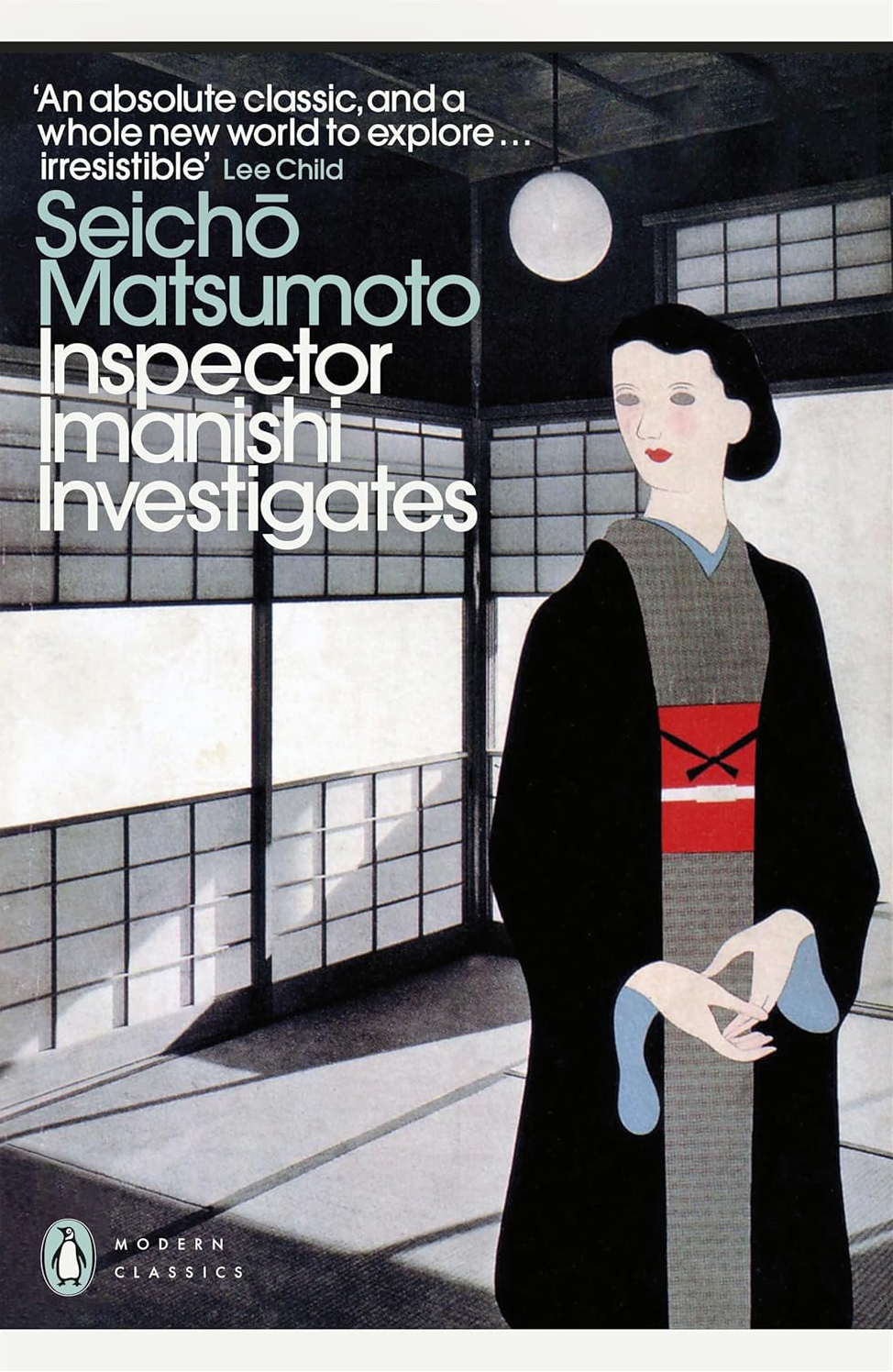
So here it goes. I am starting with ‘Inspector Imanishi Investigates’ by Seicho Matsumoto.
Start Date: 02-March-2026
End Date : 04-April-2026
30-March-2026
This is the second book by Seicho Matsumoto that I’m reading. A month in and a hundred pages through, I find it just as engaging as the first - Tokyo Express.
Seicho’s writing is plain and precise, almost understated. In many ways, it reminds me of Keigo Higashino’s style, perhaps not coincidentally. The investigative work in both their novels feels grounded in reality - slow, methodical, and often frustrating, with long stretches spent chasing dead ends. Their detectives rely less on dazzling logic and more on instinct. It’s raw, intuitive, and occasionally aided by chance. Their breakthroughs arrive suddenly, sometimes almost by accident.
This stands in contrast to classic Western writers like Arthur Conan Doyle, Edgar Allan Poe, or Ellery Queen, where deduction often unfolds with the neat precision of solving a mathematical equation.
Let’s come to the story now.
So far, the plot revolves around a man found dead near a railway station, his face so badly beaten that he is rendered unrecognizable. Imanishi, the titular character, is assigned to investigate the case. Despite the presence of considerable evidence- murder weapon, witnesses, and other clues- the investigation has led nowhere. Imanishi and his subordinate, Yoshimura, find themselves circling dead ends.
Running alongside this is another thread: a backstory involving a group of men called “Nouveau.” I’m curious to see how this connects to the central mystery, and whether such a movement ever existed in Japan in the 1960s.
That’s all for today. I’ll write more as I read on.
04-April-2026
I finished the book today and I must say that I absolutely loved reading it.
Seicho Matsumoto’s writing is both flawless and unassuming. The sentences are never overly long, yet the prose remains vividly descriptive. It demands your attention without ever feeling heavy-handed. What sets Seicho apart from many other detective writers is how he positions the reader within the investigation. Unlike conventional mysteries, where readers are encouraged to assemble their own list of suspects, Seicho takes a different route. He neither invites the reader fully into the workings of Imanishi’s mind nor allows them to run ahead of the story. And yet, the immersion is complete.
When Imanishi felt stuck, I felt that same frustration. When he experienced flashes of insight, I found myself trailing behind, trying to grasp what might have led him there. Some of his early conclusions only make sense in the final pages, and while this initially felt exasperating, it soon became clear that this was intentional. Seicho demands patience. He keeps the reader in step with Imanishi, offering a glimpse into the reality of detective work which is slow, demanding, and often consuming.
In the end, I thoroughly enjoyed the experience. I’m tempted to dive straight into another mystery, but I think I’ll hold off for now. Other genres deserve some attention too.
Until next time.
Cheers.