Start Date: 17-April-2026
End Date:
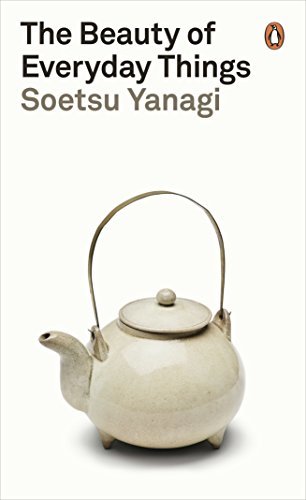
I don’t remember who recommended this book, or why. But I do remember the quiet certainty I felt last year that this was a book I had to read. I had written to my neighborhood bookstore, only to learn they didn’t have it in stock. They said they could place an order with their distributor if I really wanted it. I did. Two days later, the manager called to say it had arrived. I left work early that day and went straight to the store, hoping to make it before closing. The manager - a kind, elderly gentleman - handed me the book and wished me a happy reading. The manager, a kind and elderly gentleman, gave me the book and wished me a happy reading. This was a few months ago and the book has been collecting dust since then.
17-April-2026
Yanagi-san begins by explaining what folk craft, or mingei (in Japanese), means. The craft refers to the creation of everyday objects used by ordinary people. Such objects may not be visually appealing, but they serve their purpose to the fullest. The crucial difference between folk arts and fine arts lies in their purpose. Folk craft is made for practical purposes, to be used daily; whereas fine art is made for visual appreciation. Yanagi-san argues that folk art should be appreciated on the same level as fine art and that without folk arts, the world of craft has no meaning.
The first essay in this book begins by noting that folk art is a dying tradition, being replaced by machine-manufactured, soulless goods. He laments that mass production has led to more attention on visual appeal at the expense of the primary purpose of the object - its utility. He goes so far as to call a mass-produced object unethical and even amoral.
The latter part of the essay focuses on how the definition of beauty has evolved over the years. Yanagi-san emphasises that in the older days, beauty was deeply intertwined with the concept of utility. He states -
"... the more an object was used, the more its beauty became apparent."
He further explains that mechanised production has resulted in the proliferation of ugly, low-quality, garish objects to the point that they practically engulf us. He states that being in such proximity to these objects has only dulled our sense of beauty.
One wonders why he is so passionate about folk craft. Yanagi-san beautifully illustrates the answer to this. He likens the creation of folk objects to the works of God or nature. He states that the process of creating a folk object is wholesome and without any artifice. Its creators, the folk artisans, are ordinary workers who know nothing of art or craft theory. They know this because their family traditions have been passed down to them. They work thoughtlessly and unselfishly. Their aim is not to create beauty but to produce something useful to the commoner. Yanagi-san finds beauty in such work. For him, the creator and the object are the same.
Throughout this essay, Yanagi-san has consistently personified these objects. The objects possess the traits of their creators - honest, wholesome and patient. He also draws a relationship between the object and its user. The object is personified as a faithful, loyal companion for its user. Somewhere in the middle of this essay, Yanagi-san briefly touches upon how to revive this craft and bring it to the forefront of everyone’s attention. He argued that such craft cannot be handed over to the industries. The only way for it to thrive is to restore support to the artisans living in the provinces, where it has somehow still survived the effects of industrialism. He proposed creating a legitimate institution without hierarchical structures, led by an individual craft artist.
That’s it for today.